September 12, 2014, 12:28 pm | by Ray Nardo
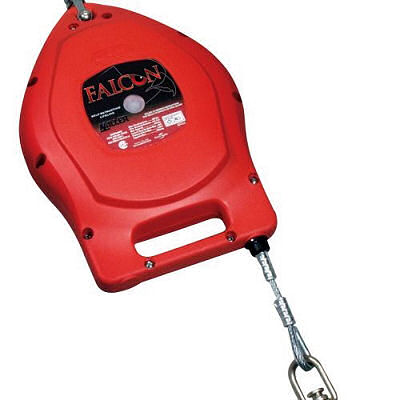
 You might think that all Self-Retracting Lifelines (SRLs) connectors are pretty much the same. As long as they do the job of protecting your workers in the event of a fall, you might believe that one SRL performs just as well as another.
In fact, there are several different types of SRLs. It’s a good idea to understand the differences between the models. Depending on your environment, certain types of may last longer than others, and do a better job of protecting your personnel from fall hazards and other dangers. Read more.
August 28, 2014, 10:51 am | by Ray Nardo
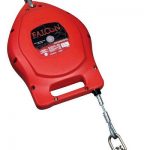 When discussing the effectiveness of certain types of fall protection equipment, there is a debate going on these days over which type of connector is best: self-retracting lifelines (SRLs) or 6-foot shock absorbing lanyards (the connector is the device that links the body harness to an anchorage, such as an overhead fixed track or single-point anchor points). It is our opinion that SRLs are the best type of connector. Yes, lanyards are less expensive, but SRLs provide more effective fall protection, and are worth the extra money you spend. Read more.
August 5, 2014, 12:30 pm | by Ray Nardo
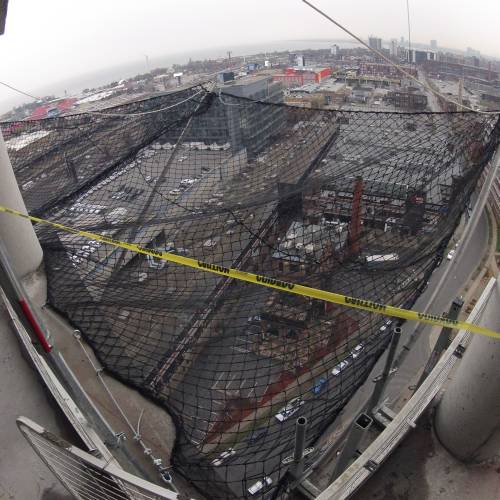
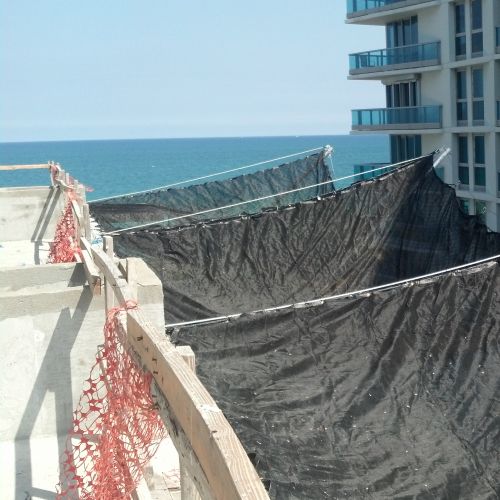
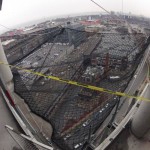 When it comes to fall protection systems, safety netting provides some of the best protection for workers on high rise construction or demolition projects. Personnel cantilever systems can be installed around the exteriors of high rise buildings. The safety netting is hung from outrigger poles, which are attached around the perimeter of a certain floor, to catch workers if they fall. (This type of system can also be installed on the sides of bridges to ensure worker safety.) Read more.
July 25, 2014, 8:00 am | by Ray Nardo
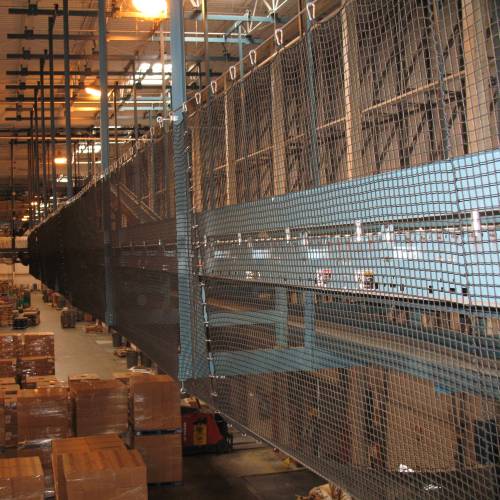
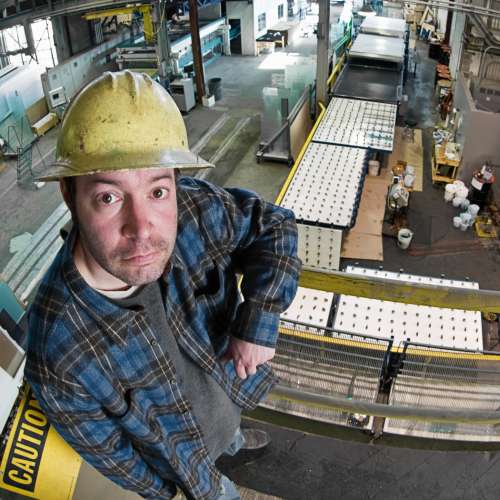
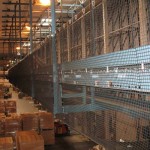 You might not think overhead conveyor belts would be a safety hazard. After all, a conveyor belt itself is not a work environment. Workers don’t stand on the conveyor while working, and don’t normally climb up to it unless it needs repair or maintenance. Even then, the apparatus is fully shut down as they service it, and no safety-conscious worker would ever service a system while it was still running. Read more.
July 11, 2014, 10:00 am | by Ray Nardo
Railroad Bridge Netting Installation
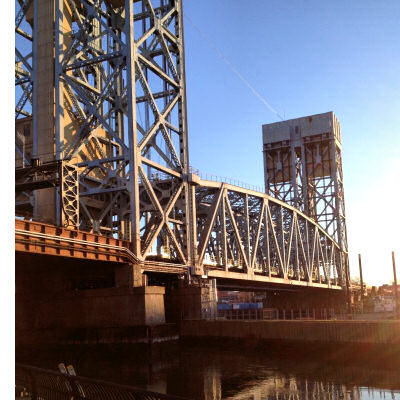
 FallProof recently completed the last phase of a four-phase railroad bridge netting project for a major public transportation company in the State of New York. This particular project involved the netting of a 440-foot long lift bridge that spans mostly water. This involved the unique challenge of completing the entire project from a barge. We installed personnel-rated netting underneath the span, thus, providing an OSHA-compliant solution for fall protection, eliminating the need for workers to tie off while conducting maintenance and track replacement. The netting also served the two-fold purpose of debris collection. As part of the project we cleaned and inspected the existing nets. Read more.
June 30, 2014, 3:10 pm | by Ray Nardo
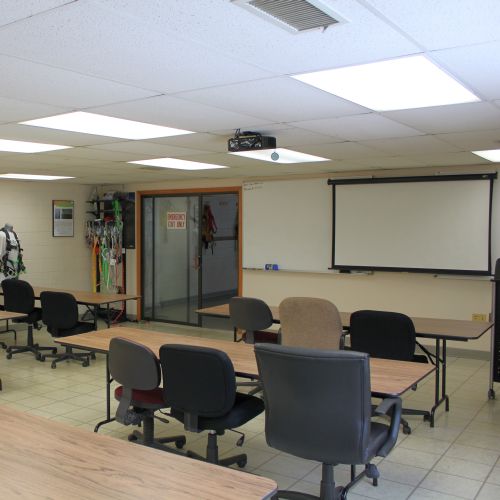
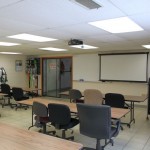 Here at FallProof Systems, I serve as the primary trainer for our fall protection training classes. Each class I teach is a little bit different. We get all types of workers as students, and their reasons for taking each class often depend on the type of class.
To give you a quick overview, the Fall Protection training courses we offer are: Read more.
June 17, 2014, 11:12 am | by Ray Nardo
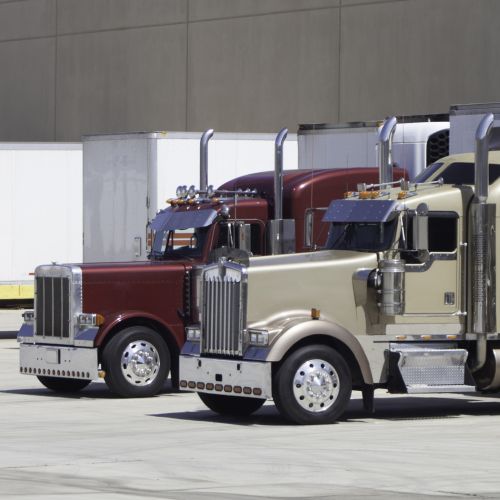
 Whether you’re talking about tankers, flatbeds, or open or enclosed trailers, the business of loading and unloading, or servicing large vehicles can present a fall hazard. Working on loading docks, on scaffolding above or beside the trucks, or on the roof or sides of the trucks themselves, workers put themselves at risk in multiple situations where they are in danger of falling. Read more.
May 9, 2014, 11:06 am | by Ray Nardo
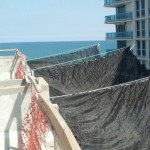 Construction sites and demolition operations come with their own set of unique fall hazards. Putting people in serious danger and structures at risk for major damage, these scenarios have potentially costly ramifications in terms of both lives and dollars.
Safety netting, also known as debris or personnel netting, helps to prevent fall hazards around construction sites and demolition operations. Read more.
May 2, 2014, 2:18 pm | by Ray Nardo
 According to the Bureau of Labor Statistics, in 2012, there were 544 fall-related fatalities. Of those cases, about one in four occurred from a fall of 10 feet or fewer. This statistic suggests something rather stark: It doesn’t take a whole lot of distance for a workplace accident to be fatal. As the person responsible for safety at your factory, you’re likely aware of the gruesome statistics. But, are you fully informed of all the various ways that fall protection systems keep your personnel safe? Read more.
April 25, 2014, 11:19 am | by Ray Nardo
 Rooftop fall protection is a necessity for keeping your workers safe while they perform tasks atop buildings. OSHA 1926.501(b)(1) states: “Unprotected sides and edges. Each employee on a walking/working surface (horizontal and vertical surface) with an unprotected side or edge which is 6 feet (1.8 m) or more above a lower level shall be protected from falling by the use of guardrail systems, safety net systems, or personal fall arrest systems.” Read more.

 You might think that all Self-Retracting Lifelines (SRLs) connectors are pretty much the same. As long as they do the job of protecting your workers in the event of a fall, you might believe that one SRL performs just as well as another.