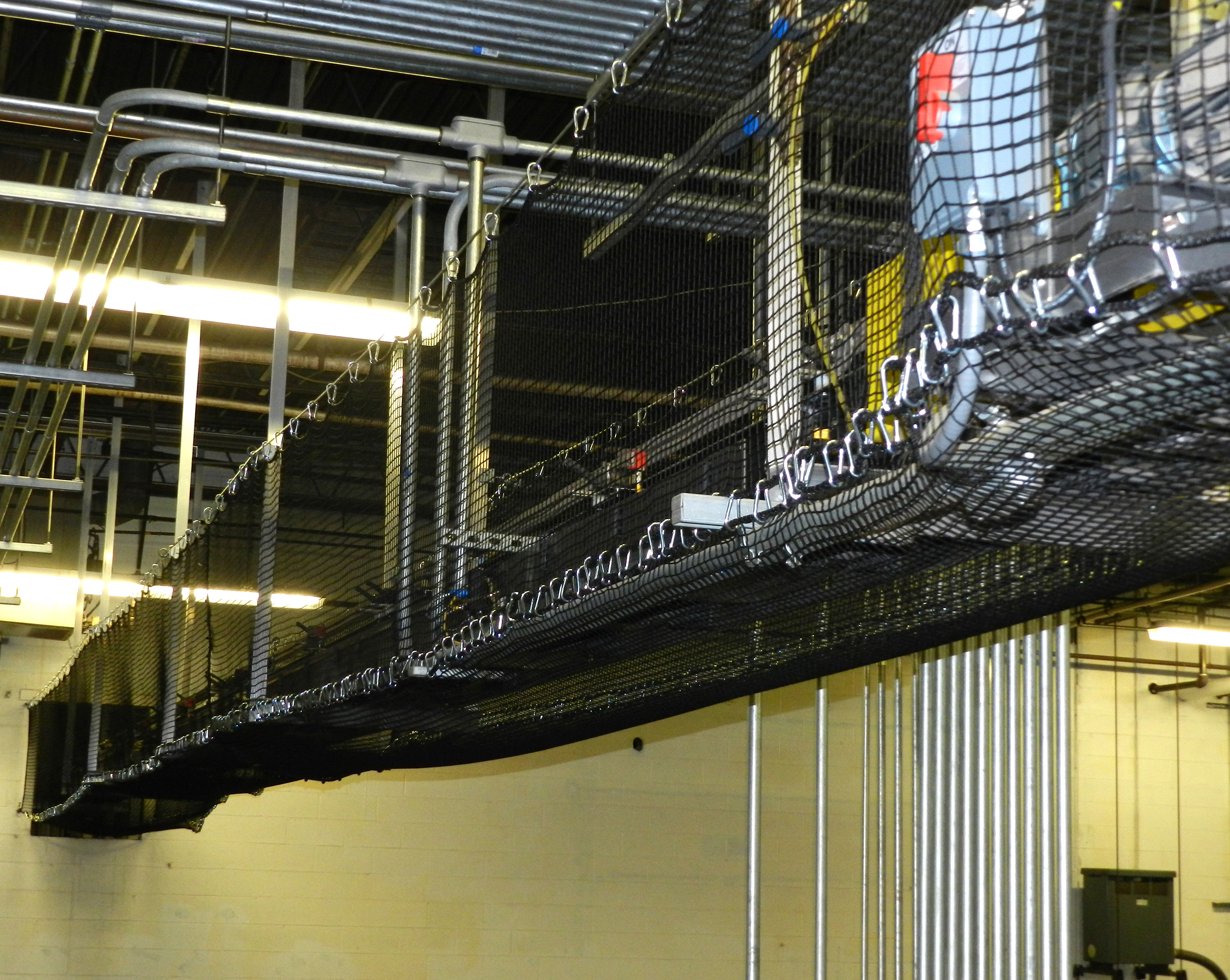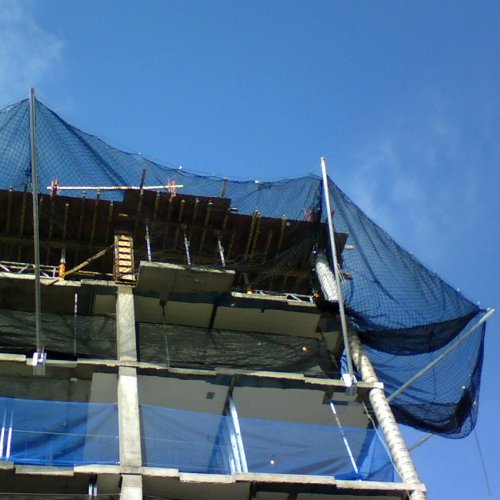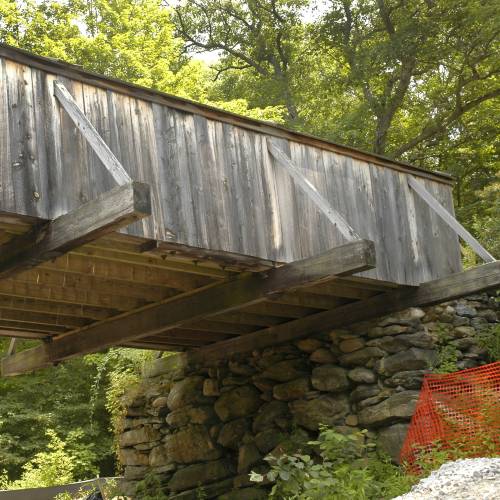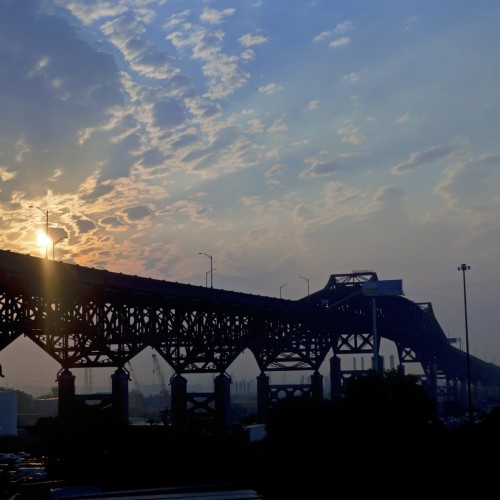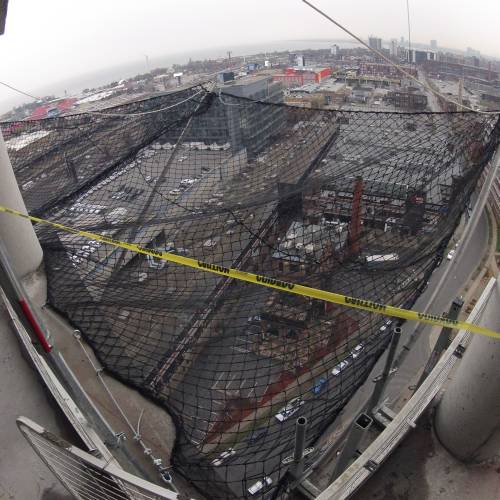
Debris netting is a unique form of fall protection for both the worker and the pedestrian.
April 15, 2026, 3:22 pm | by Ray Nardo

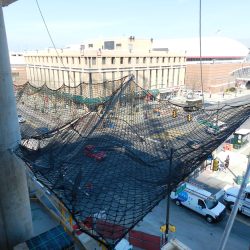
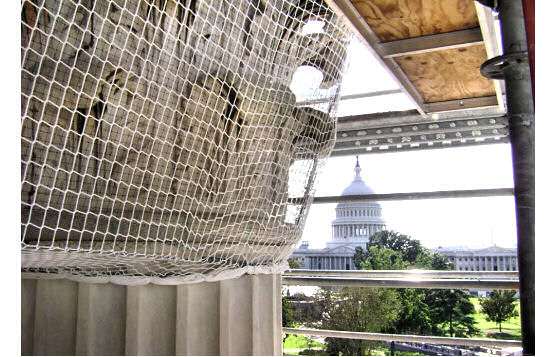
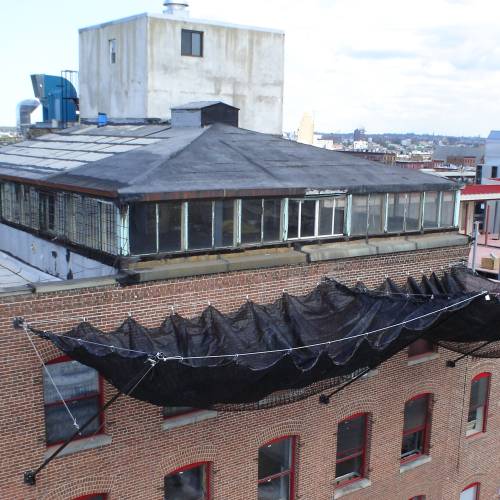
Debris Net For Falling Mortar On U.S. Supreme Court Building Restoration

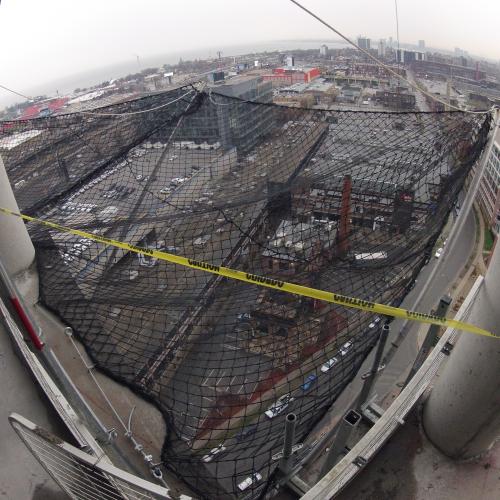
Debris netting is designed to catch falling objects. Fallproof installs debris netting during renovation of historic structures,  repair work on highway infrastructure or railroad trestles, bridge thoroughfares that are over water, and elevated workplaces on new construction of high-rise office buildings, hotels, resorts, etc.   The mesh size used in each project is based on the type of material required for the debris containment.  FallProof provides turnkey design, engineering and installation for a variety of  solutions.


  • Construction Sites

    When there’s construction, there’s debris. That’s why it’s important to have one or more barriers in place (horizontal and vertical) prior to demolition or initial groundbreaking at a construction site.

    A common solution is setting up a fine mesh barrier around construction sites on the ground level, which protects the streets, sidewalks and people around the construction site. This also provides a “visual” barrier of ongoing construction work from the public.

    Debris nets may also be used around floors to contain wind-swept debris or dropped tools and certainly as a horizontal “envelope” around the perimeter of a building for fall protection and debris containment.

  • Open Pits

    Open pits are often an overlooked fall hazard because it isn’t as obvious as an elevated surface or rooftop. Safety netting is a very good, cost-effective solution to fall protection for open-pit fall hazards.

    An example of an open pit is an automotive maintenance bay. Mesh could be installed over the floor pit opening when not in use to catch and cradle a person falling into the floor opening.

    Covering open pits in this manner is more beneficial than steel grating because it lets in more natural light for your technicians to see what they are working on.

  • Conveyor Belts

    In today’s high-tech distribution centers, things move quickly and at a breakneck pace. With overhead conveyor belts, items sometimes become dislodged and fall. It’s important to protect the people working nearby or below these conveyor belts.

    Safety netting is a great protector against falling packages and roller blowouts. The mesh provides a soft catch, greater visibility of the conveyor and helps ensure you are meeting all OSHA requirements for conveyor belt guards.
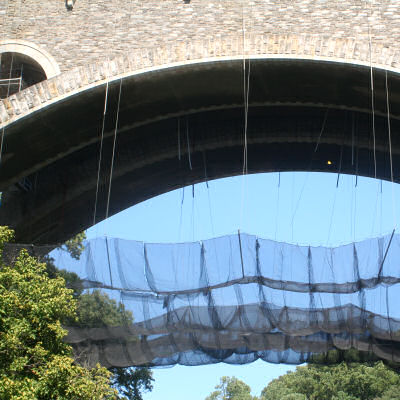
Debris nets installation during historical bridge rehabilitation project. Safety Netting For Your Workers and Construction Debris


Best Practices For Safety Netting Solutions
The following are widely regarded best practices to attain the safest netting solutions for your facility.

  • Install High-Quality, Durable Safety Netting
    Many facility managers try to save money by opting for cheaper, internationally-made safety netting as opposed to high-quality, American-fabricated nets. You need to ensure you’re using engineered and tested safety netting to provide effective fall protection for your workers. Two of the top US manufacturers – Incord and PearlWeave – have rigorous testing standards and high-quality manufacturing facilities.
  • Use Tested, Engineered And High-Quality Hardware
    While usually the least expensive part to complete a safety netting solution, the hardware is crucial to the overall strength and integrity of the nets. If you don’t use proper hardware, the net system is at a risk for failure.
  • Implement Properly Engineered Layouts And Plans
    Facility managers often feel it’s not necessary to engineer a safety netting system. This is a mistake. Engineering should be conducted to ensure the system will perform when needed, taking into account supporting structures and all forces that may be imposed on the system.
  • Ensure A Qualified Installation Technique
    Make sure you have a competent third-party installer, or a supervised training session. While it might look simple, safety-netting systems are a bear to install. You don’t want to have an accident or something falling from 10 stories up because a worker was fumbling about with how to install the system correctly.

Ready to learn more about the best safety netting solutions for your facility?   Call us at 800-452-0222.
Personnel Fall Protection Netting Solutions

March 2, 2026, 3:29 pm | by Ray Nardo

Personnel Fall Protection Netting: Catching Falls Before They Become Incidents

Falls Happen Fast. Protection Has to Be Faster.

A slip. A misstep. A moment of lost footing.

Falls from height happen in seconds, and when they do, there is rarely time for correction. That reality is why personnel fall protection netting exists. It is not about reacting to a fall. It is about designing the environment so the fall never becomes a serious injury or worse.

Personnel fall protection netting is a collective safety solution that works silently in the background, protecting every worker in the area without requiring a single clip, buckle, or decision.

What Is Personnel Fall Protection Netting?

Personnel fall protection netting is an engineered, high-strength net system installed beneath elevated work areas. Its purpose is simple and critical: arrest a worker’s fall before they reach a lower level or hazardous equipment.

Unlike personal fall arrest systems, netting does not rely on individual behavior. Once installed, it is always there, always active.

A properly designed netting system:

  • Absorbs fall energy through controlled deflection
  • Prevents contact with lower levels
  • Protects multiple workers simultaneously
  • Remains effective regardless of worker movement

It is protection by design, not by chance.

Where Personnel Netting Makes the Most Sense

Personnel netting shines in environments where movement is constant and traditional tie-off methods slow work or introduce risk.

Typical applications include:

  • Rail car and locomotive maintenance facilities
  • Aircraft hangars and maintenance bays
  • Bridges and elevated infrastructure
  • Industrial plants with open mezzanines or platforms
  • Stadiums, arenas, and large roof structures

Anytime workers are exposed to a fall hazard over a broad area, netting deserves consideration.

Why Safety Leaders Choose Netting

It Protects Everyone at Once

One engineered system protects multiple workers across an entire work zone. No individual setup. No missed connections.

It Removes Human Error from the Equation

Workers do not need to remember to tie off, reattach, or select the correct anchor. The system is already doing its job.

It Keeps Work Moving

Without constant connection changes, crews move more freely and efficiently, reducing downtime while maintaining protection.

It Adds a Critical Layer of Redundancy

Netting can serve as primary protection or as a backup beneath overhead lifelines and other active systems.

Engineering Matters More Than the Net Itself

Personnel fall protection netting is not a one-size-fits-all product. The real protection comes from the engineering behind it.

  • Key design considerations include:
  • Maximum potential fall distance
  • Net deflection under load
  • Anchor loads and structural capacity
  • Clearance to lower levels
  • Environmental exposure and durability

Without proper engineering, even the strongest net may fail to perform as intended. That is why professional design and review are essential.

Inspection and Long-Term Reliability

Netting is durable, but it is not maintenance-free.

To remain effective, systems should include:

  • Routine visual checks by site personnel
  • Documented periodic inspections
  • Inspection after any fall event
  • Replacement of damaged or UV-degraded components

Regular inspection ensures the system performs the same way on day one thousand as it did on day one.

Netting as Part of a Bigger Safety Strategy

The strongest fall protection programs do not rely on a single solution. Personnel netting works best when integrated with:

  • Overhead lifelines or rigid rail systems
  • Guardrails and controlled access zones
  • Authorized and competent person training
  • Written rescue and emergency response plans

Layered protection creates safer facilities and more resilient operations.

The Bottom Line

Personnel fall protection netting does one thing exceptionally well: it turns a potentially catastrophic fall into a controlled event.

When properly engineered, installed, and maintained, netting provides continuous, collective protection that does not depend on perfect human behavior.

In environments where workers move, work, and adapt constantly, personnel fall protection netting is not just an option. It is a smart design decision.

A Practical Next Step

Whether you are considering personnel netting for a new application or relying on an existing system, performance depends on engineering and ongoing verification.

A professional engineering review can confirm:

  • That the system is properly designed for fall distances and clearances
  • That anchorage loads align with the supporting structure
  • That the net will perform as intended during a real fall event
  • Routine inspections ensure the system continues to meet those design assumptions year after year.

A short review today can prevent a critical failure tomorrow.

📅 Schedule a Safety Assessment Today »

📞 Or call us at (609)-325-5555

Solving the unique challenges of Fall Protection in entertainment venues.

January 7, 2026, 11:57 am | by Ray Nardo

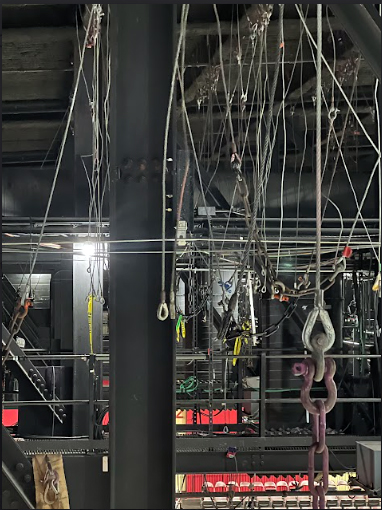
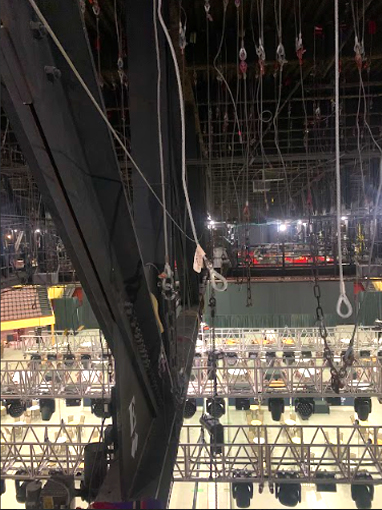
Working at heights in entertainment venues like theatres and stadiums presents unique fall protection challenges. While many permanent structures, such as catwalks, are equipped with built-in guardrails and toe boards to prevent falls and protect against falling objects, accessing areas without these pre-built safeguards can be extremely dangerous. Workers often have to climb out of catwalks and maneuver through structural roof members to reach these points. Eliminating these deadly hazards is paramount.


Catwalk Safety:

It is crucial to remember that catwalks and their permanent guardrail systems are designed to protect workers who maintain their balance and keep their bodies behind the rails. Workers should not climb on or lean over the rails, as this can offset their center of gravity and compromise the safety of the system.

Personal Protective Equipment (PPE):

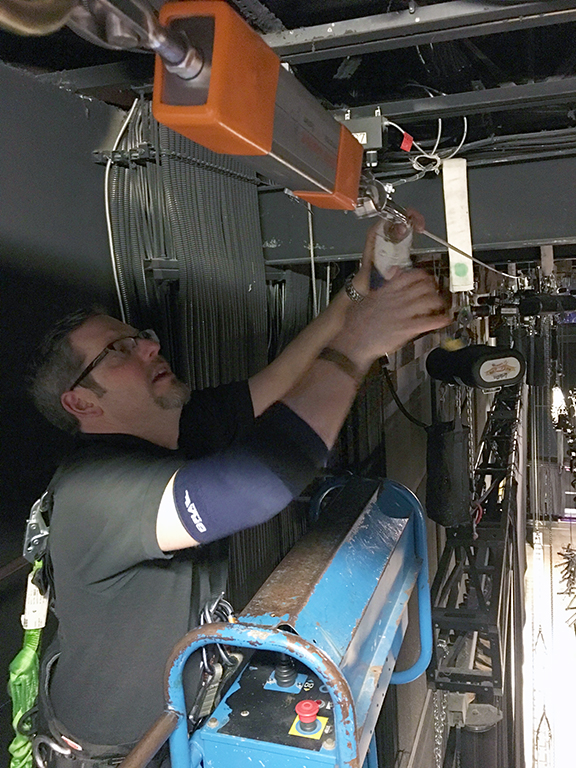
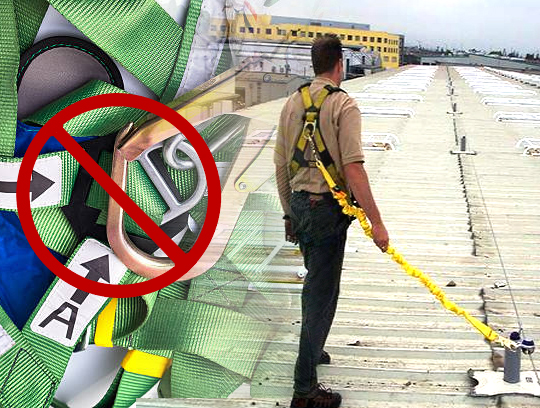
Workers have multiple PPE options, including full-body harnesses, seats, lanyards, and Self-Retracting Lifelines (SRLs). The main objective is to minimize the worker’s free fall and total fall distance, thereby reducing the force exerted on the body during a fall arrest.

Permanent Fall Protection Systems:

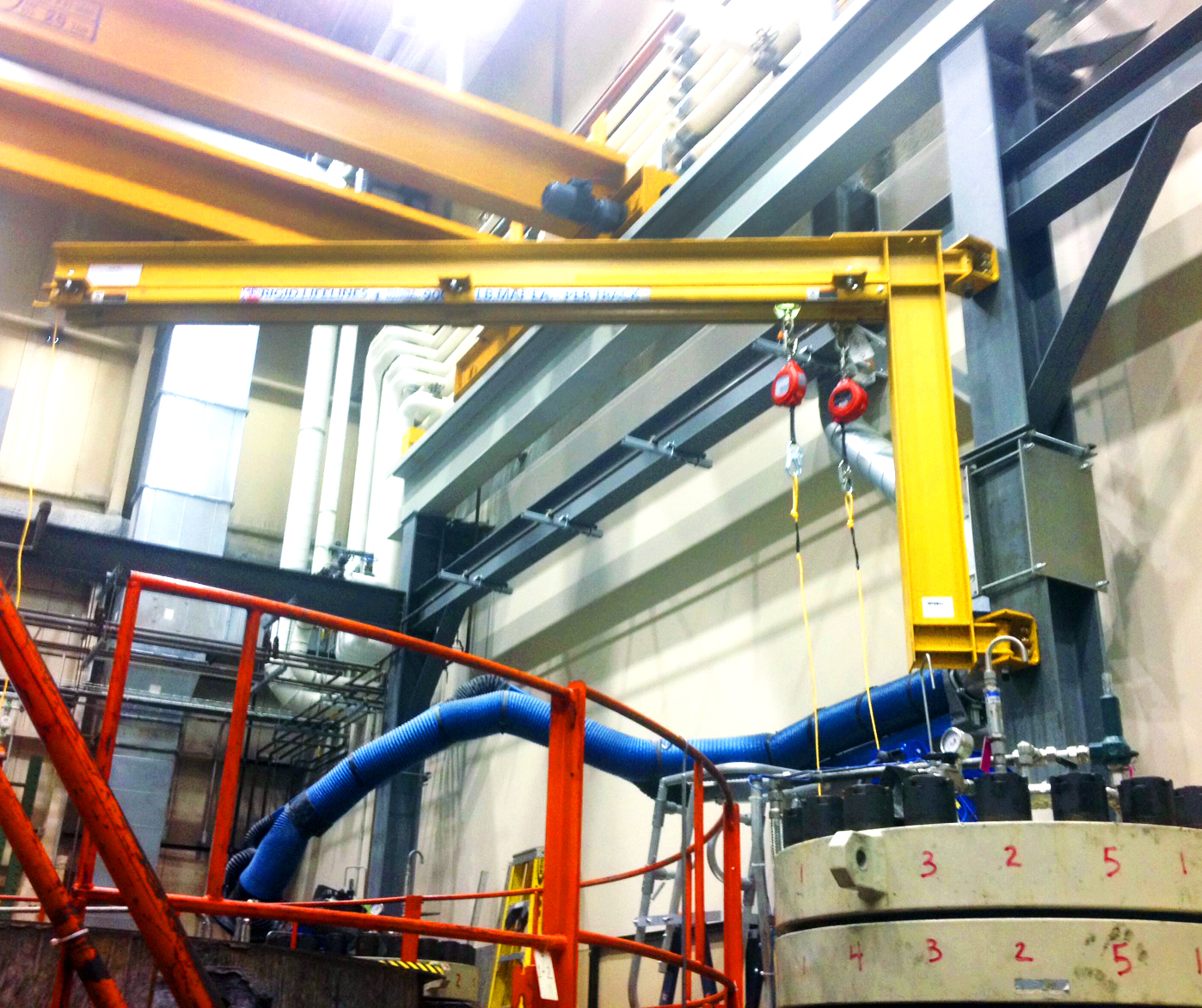
As stages and performance areas evolve and designs change (often with the addition of heavy lights and speakers), installing permanent fall protection lifelines and anchor points may become necessary. Due to the original design loads and the cumulative weight added over the years, these systems must be designed by a Fall Protection Qualified Person. This expert ensures the system can withstand all potential forces.

Temporary Solutions:

Temporary fall arrest solutions are also available, including bolt-and-clamp-on systems and portable horizontal lifelines that can be installed and moved before work begins. Proper preparation is always the key to safety.

High-Risk Areas: Orchestra Pits and Stage Traps:

Orchestra pits and stage traps pose a significant risk to both performers and stagehands.

  • Stage Traps/Trap Doors can be made safer by installing netting below them, providing a safety barrier if an opening is accidentally left uncovered.
  • Orchestra Pits can also be equipped with netting to protect performers who accidentally fall off the stage, safeguarding both the performers and the orchestra below.

Next time you are in a stadium, arena, or theatre, take a moment to look up and appreciate the complex safety challenges faced by the behind-the-scenes personnel. If you are involved in these operations and require assistance resolving safety concerns, please feel free to contact FallProof.

📅 Schedule a Safety Assessment Today »

📞 Or call us at (609)-325-5555

Custom Fall Protection: Why One Size Doesn’t Fit All

July 22, 2025, 9:30 pm | by Ray Nardo

Custom Fall Protection Solutions for Unique Work Environments

Custom Fall Protection: Why One Size Doesn’t Fit All?
Because safety should adapt to your environment — not the other way around.
Every facility is different. Whether you’re working in a steel mill, food processing plant, warehouse, or on a historic rooftop, one thing is always true: standard fall protection doesn’t cut it.
At FallProof Systems, we know that protecting workers means designing systems that match the environment, operations, and hazards of each specific site.

When “Off-the-Shelf” Doesn’t Work –
Pre-engineered systems often fail in facilities that have:

  • Obstructions like overhead cranes, piping, or ductwork
  • Unusual rooftop elevations or fragile surfaces
  • Tight maintenance access paths
  • Historic structures or visually sensitive environments

What Custom Fall Protection Looks Like –
A truly custom solution includes:

  • Engineering analysis of structure and workflow
  • Unique layout designs based on field measurements
  • Custom-fabricated equipment (rails, anchors, platforms)
  • Seamless integration into existing infrastructure
    It’s not just about compliance — it’s about real-world usability.

Real Results from Custom Designs
We’ve designed systems for:

  • Protecting tanker truck hatches on uneven loading pads
  • Installing track systems over machines that never stop running
  • Adding fall safety to 100-year-old rooftops without permanent alteration

Let’s Build the Right Fit
Custom doesn’t mean complicated. With FallProof’s turnkey process, we handle everything — from site visit to install.
📅 Schedule a custom fall protection consultation »
📞 Or call us at (609)-325-5555

Final Word
When it comes to fall protection, a tailored solution isn’t a luxury — it’s a necessity.

Preventing Worker Falls in High-Rise Construction

January 4, 2019, 1:49 pm | by Ray Nardo

Netting Systems Save Lives

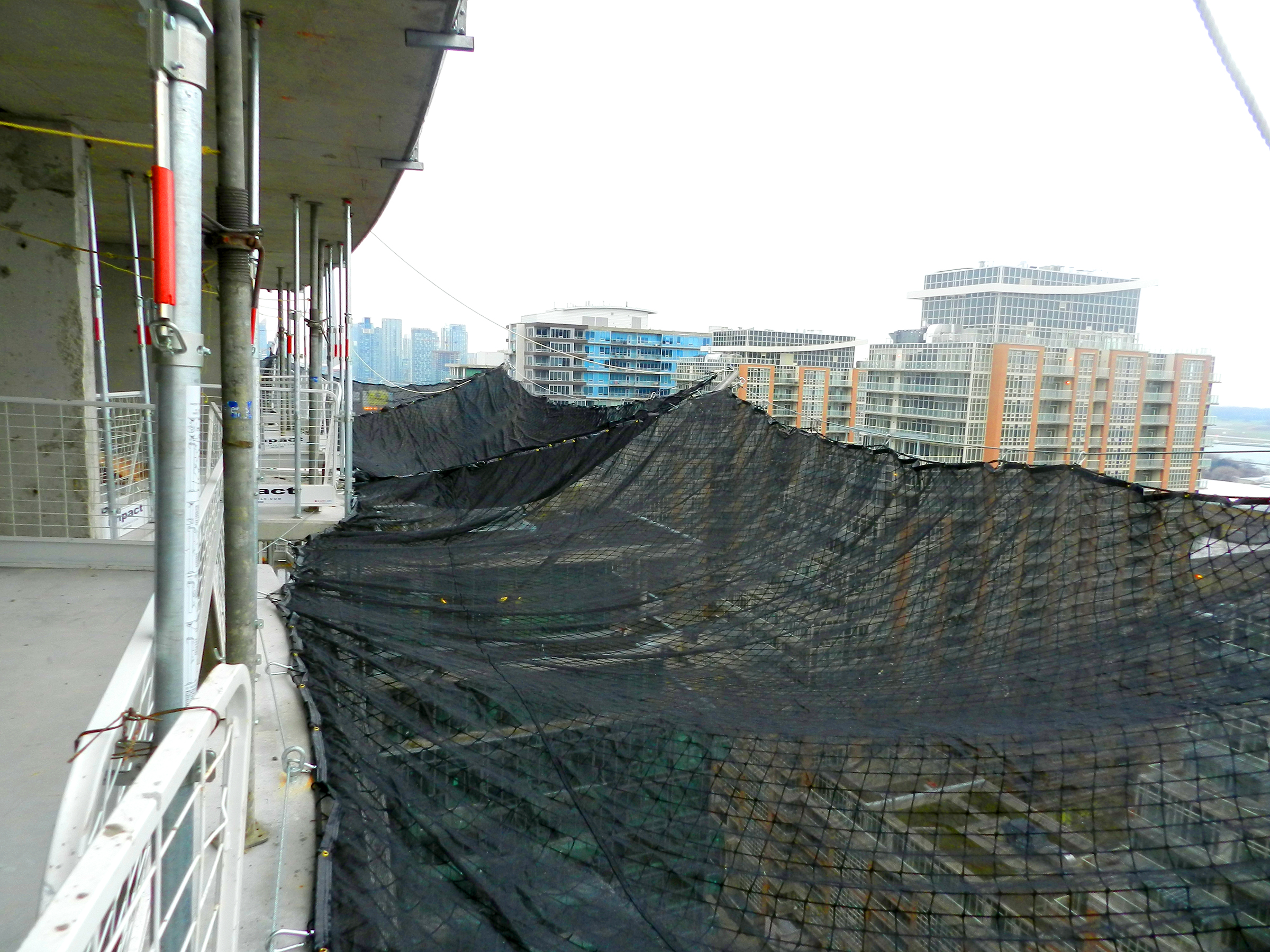
Horizontal_Perimeter_System_For_Building_FallProof_TorontoHorizontal Perimeter Netting (HPN) Systems save lives by catching a falling worker before they hit the ground. With its concentration of skyscrapers and crowded streets, it is no surprise that New York City has led the nation in requiring HPN systems on high-rise construction projects. Due to its close proximity to NYC, Fallproof has been a leader in the design, testing and supply of HPN systems and components for over 20 years. Read more.

Recent FallProof Projects – May 2015

May 11, 2015, 10:56 am | by Ray Nardo

Large Horizontal Perimeter Personnel Safety Net System

Safety Netting System for a Construction Job SiteFallProof recently partnered with a large general contractor to provide a personnel safety net system for a high rise construction project in Long Island City, NY. The building was intricately designed, with many levels and tiers, which created multiple attachment points for the safety netting outrigger poles. As a result, the safety netting needed to be installed in different configurations on different floors of the building.  Read more.

Debris Netting Installation for the Historic Comstock Bridge

April 29, 2015, 3:36 pm | by Ray Nardo

Comstock CT Bridge Construction NettingIn a previous article, we talked about FallProof System’s recent work on the Pulaski Skyway. As part of the New Jersey Department of Transportation’s $1.8 billion renovation project, FallProof installed a custom debris netting solution to help road workers remove a section of the skyway’s old roadway. Today, we’ll take a look at another historic renovation project where FallProof provided a debris netting solution. Read more.

Debris Netting on the Pulaski Skyway

February 20, 2015, 9:29 am | by Ray Nardo

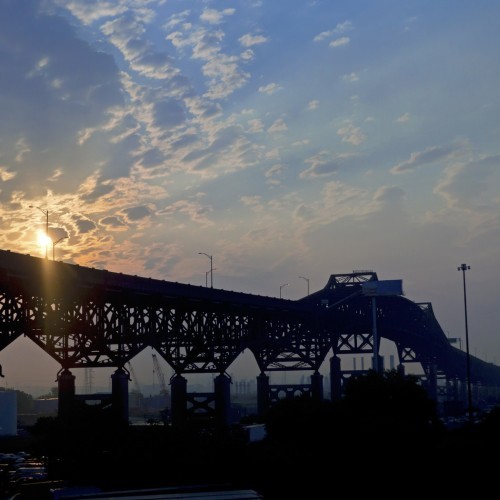
Pulaski Bridge Debris NettingYou’re probably familiar with the Pulaski Skyway from the opening of the TV show, The Sopranos. It’s the bridge with the black steel truss girders that Tony Soprano drives over on his way home to his New Jersey mansion.

Opened in 1932, the Pulaski Skyway is New Jersey’s most famous elevated roadway. It was built in the 1920s as one of America’s first “super-highways,” and is listed on the National Register of Historic Places. The skyway is named for General Casimir Pulaski, a Polish cavalry officer who led American troops in several New Jersey battles during the Revolutionary War. Read more.

Netting and Fall Protection Installations by FallProof – Dec 2014

January 5, 2015, 3:04 pm | by Ray Nardo

Major Transportation Bridge/Highway Netting

Installation of bridge debris netting on the Pulaski Skyway during its rehabilitation and renovation by New Jersey Department of Transportation.FallProof was excited to have been given the opportunity to provide debris netting for the iconic Pulaski Skyway, which is currently undergoing a $2 Billion+ rehabilitation and renovation project. One of the primary traffic arteries into New York City, this project has many moving parts. Working with the New Jersey Department of Transportation and the general contractor awarded the project, we provided 115,000 square feet of our RocBloc netting product. Read more.

Debris Netting Fall Protection: When To Rent Versus When To Purchase

August 5, 2014, 12:30 pm | by Ray Nardo

Debris and Personnel Netting for Construction Job SitesWhen it comes to fall protection systems, safety netting provides some of the best protection for workers on high rise construction or demolition projects. Personnel cantilever systems can be installed around the exteriors of high rise buildings. The safety netting is hung from outrigger poles, which are attached around the perimeter of a certain floor, to catch workers if they fall. (This type of system can also be installed on the sides of bridges to ensure worker safety.) Read more.