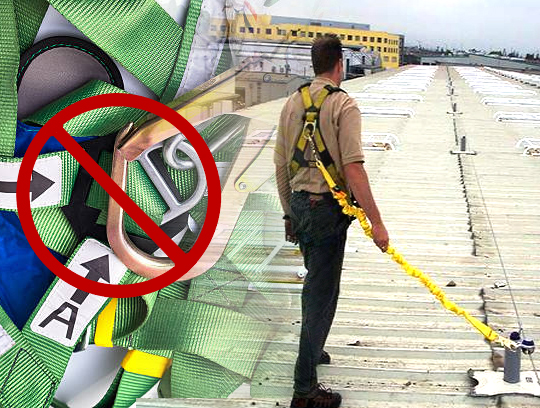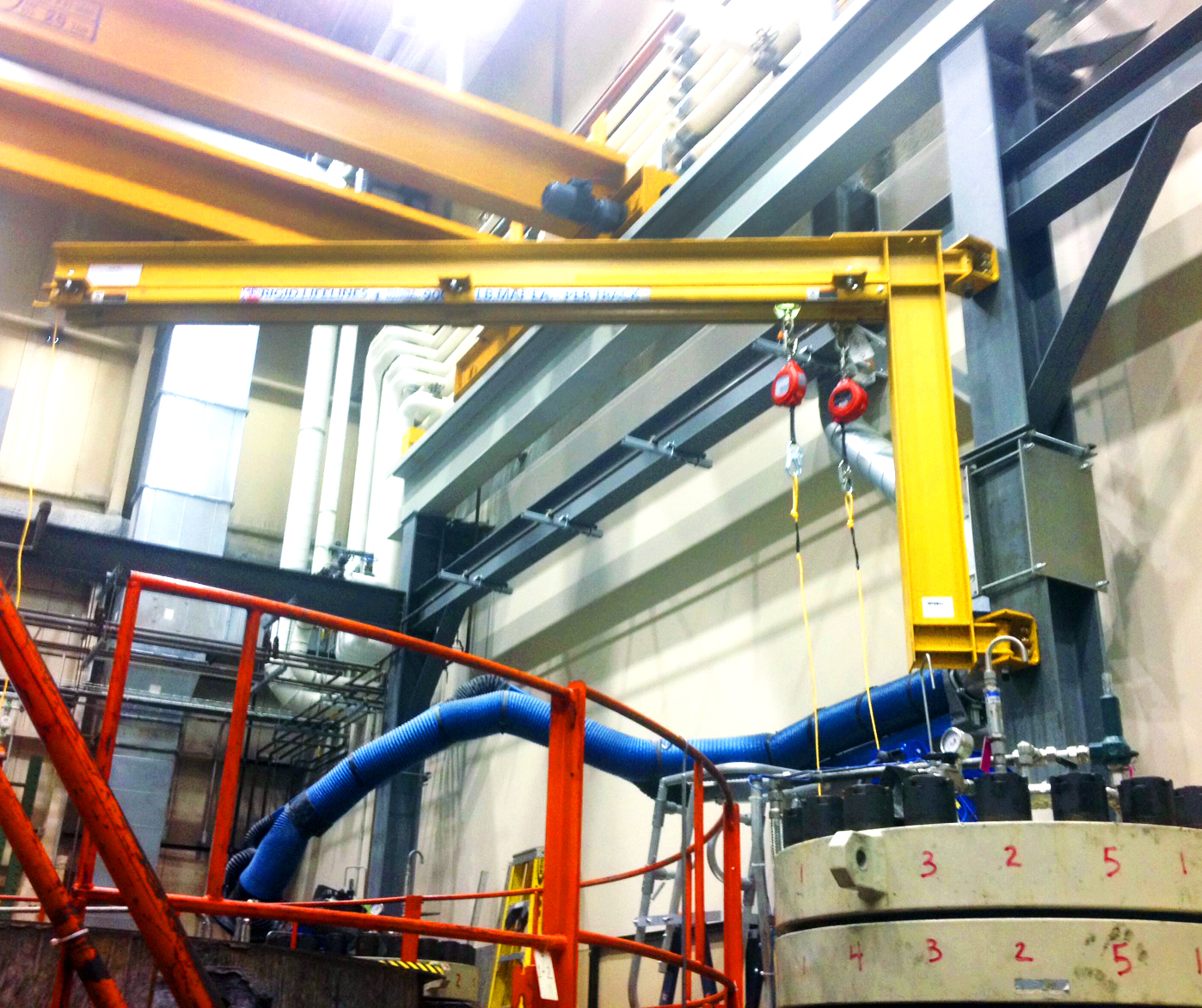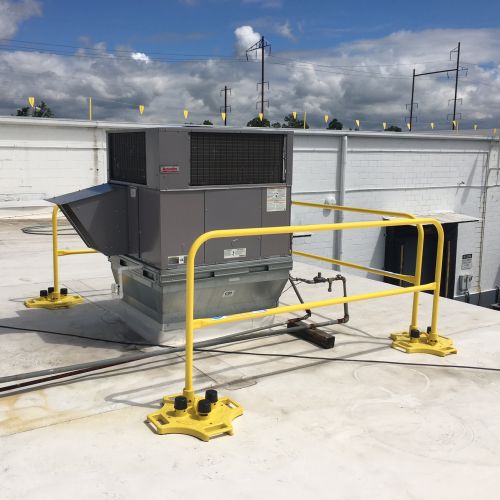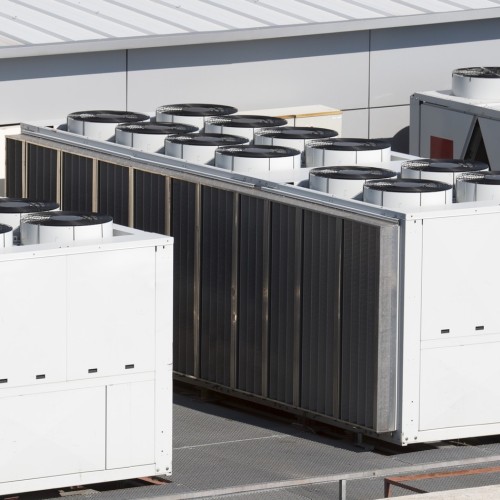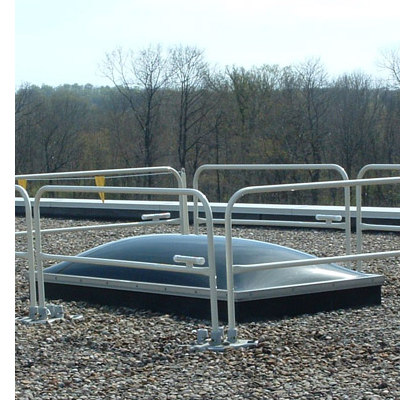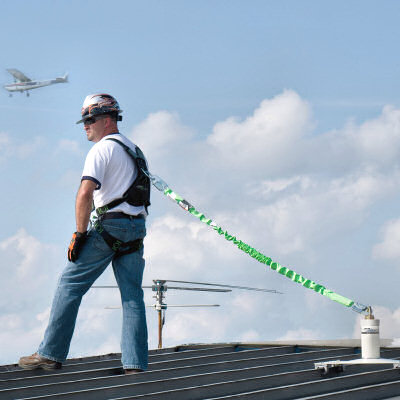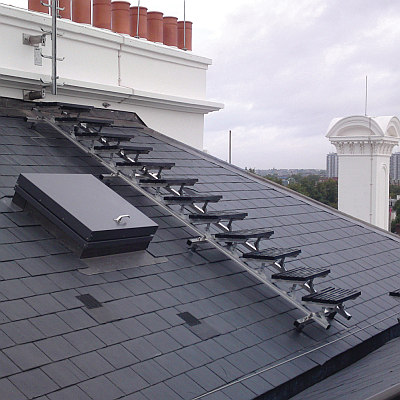
Here’s how Rooftop Crossovers provide safety for the worker and maintain the integrity of the roof.

January 21, 2026, 11:11 am | by Ray Nardo

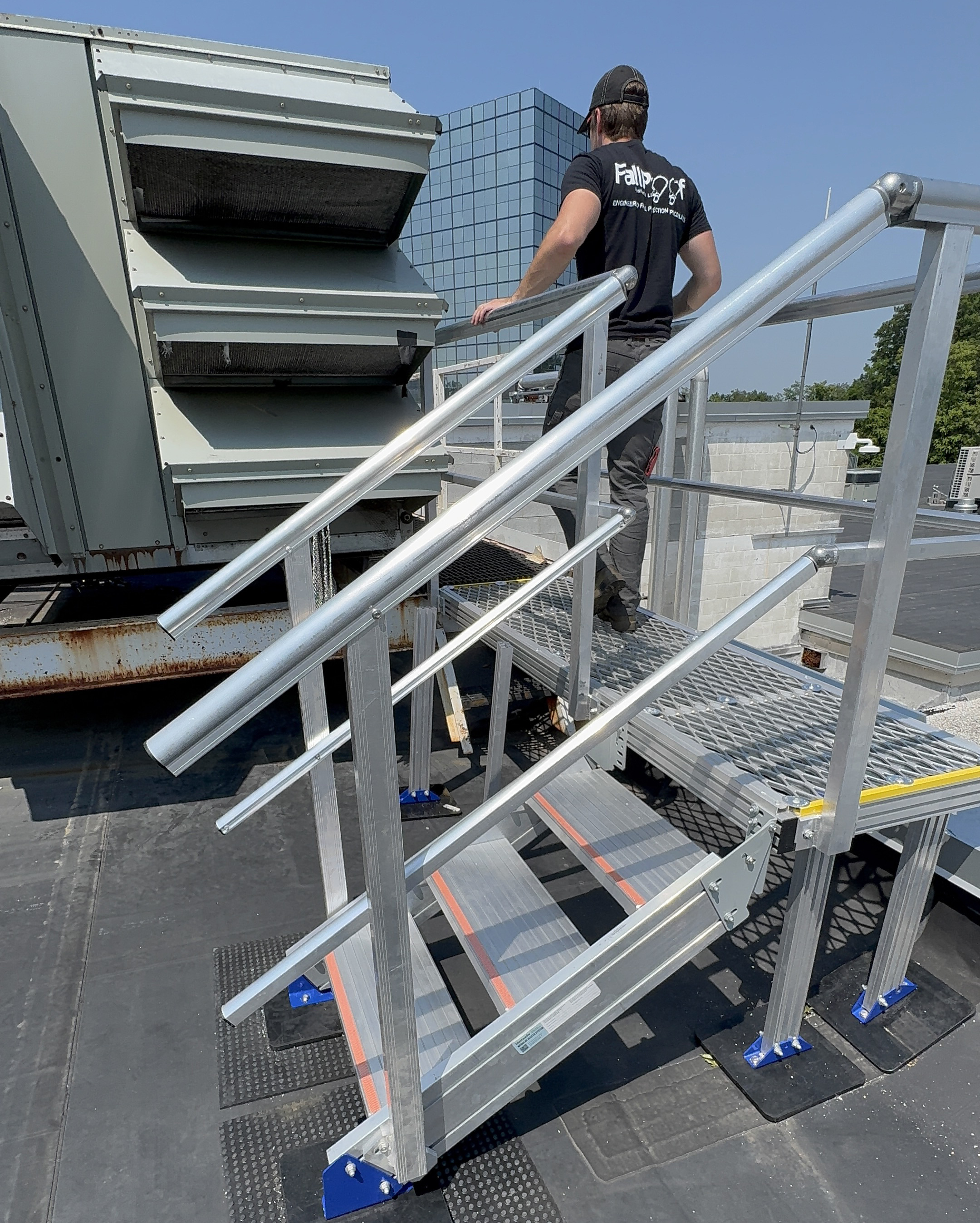
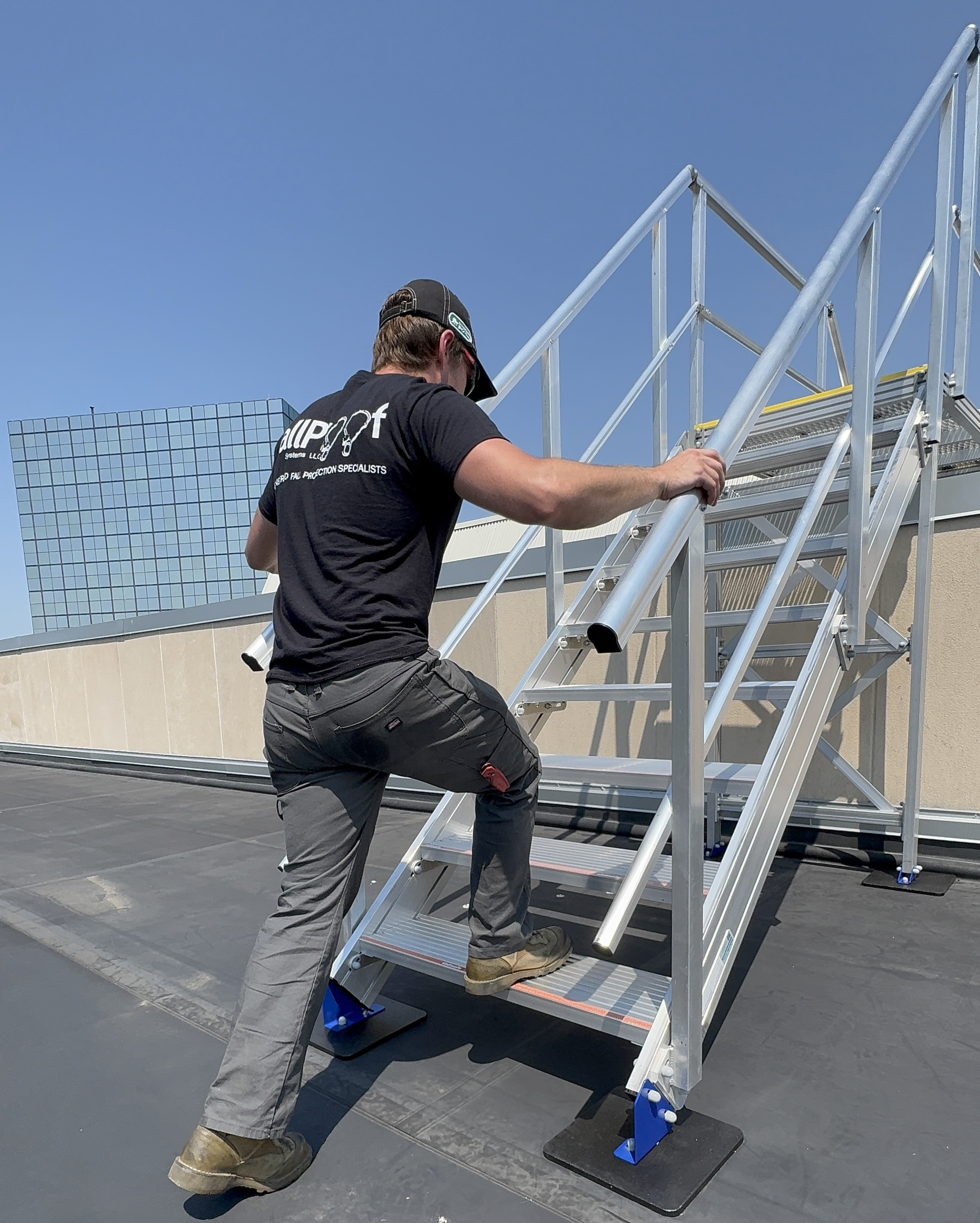
Rooftop crossovers are modular stairs or ramps installed on commercial and industrial roofs to provide safe, designated pathways for workers to navigate over obstacles such as pipes, ducts, equipment, and changes in elevation.

Why Rooftop Crossovers Are Important

Rooftop crossovers are crucial for two primary reasons: ensuring worker safety and protecting the structural integrity of the roof and equipment.

  1. Enhanced Safety and OSHA Compliance 

Roofs are inherently hazardous environments. Crossovers mitigate significant safety risks and help building owners comply with Occupational Safety and Health Administration (OSHA) regulations.

  • Prevents Falls and Trips: They provide a stable, anti-slip walking surface with guardrails, eliminating common trip hazards like loose cables, pipes, and sudden elevation changes.
  • Eliminates Unsafe Practices: They remove the need for maintenance personnel to use unstable ladders or climb over equipment, which is the leading cause of rooftop falls.
  • Meets Regulatory Standards: OSHA and other building codes require permanent, safe access solutions for equipment installed on roofs above certain heights and for crossing obstacles over a specific size. Non-compliance can result in substantial fines and legal liability in case of an accident.


  1. Protection of Roof Membrane and Equipment

Foot traffic directly on the roof surface can cause significant, premature damage that compromises its ability to waterproof and insulate the building.

  • Maintains Roof Integrity: Crossovers provide a non-penetrating system (often using base plates or clamps) that distributes weight evenly and keeps workers off the delicate roof membrane, thus preventing punctures, abrasions, and damage to seams.
  • Protects Warranties: Many commercial roof warranties are voided by damage from unmanaged foot traffic or by penetrating the roof membrane during installation, both of which are avoided by using non-penetrating crossover systems.
  • Prevents Equipment Damage: By guiding workers over obstacles, crossovers protect expensive equipment like HVAC units, solar panels, and piping from being accidentally stepped on or damaged.

In summary, installing a rooftop crossover is a cost-effective safety solution that protects personnel, preserves valuable building assets, and ensures regulatory compliance for any facility requiring regular rooftop maintenance.


  1. Basic Requirements
  • Load capacity: Stairs must be able to handle a load of five times the anticipated load, with a maximum weight capacity of at least 1,000 pounds.
  • Guardrails: Guardrails are required on all open sides and must be at least 42 inches high.
  • Handrails: A handrail must be on the open side of the stair system.
  • Forces: Guardrails and handrails must be able to withstand at least 200 pounds of pressure from any direction.
  • Toeboards: Toeboards are needed if there is a risk of tools or objects falling to a lower level.
  • Surface: All surfaces must be smooth to prevent catching on clothing or other items.

Stair dimensions

  • Width: Minimum of 22 inches.
  • Riser: Maximum of 8 inches high.
  • Tread: Minimum of 9.5 inches deep.

Landing requirements

  • Dimensions: Must be at least as wide as the stairs and a minimum of 30 inches long in the direction of travel.
  • Door swing: If a door swings near the landing, there must be at least 21 inches of clearance from the door swing’s end.

Other considerations

  • Clearance: If the step-across distance from the ladder or stairs to the platform exceeds 12 inches, a landing platform is required to reduce the distance.
  • Markings: Crossovers, aisles, and passageways must be conspicuously marked

Ready to Uncover the Hidden Risks?

Let us help you turn rooftop hazards into protected zones.
📅 Schedule a Safety Assessment Today »

📞 Or call us at (609)-325-5555
The Rooftop Risk You Can’t See from the Ground

September 15, 2025, 12:41 pm | by Ray Nardo

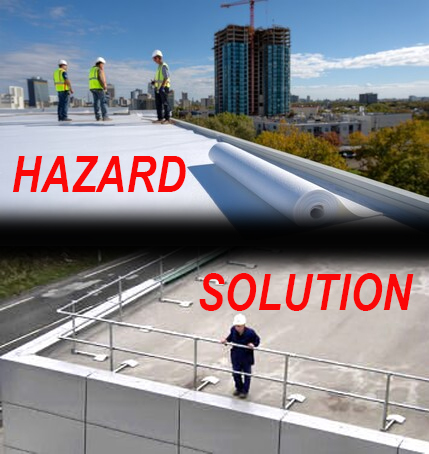
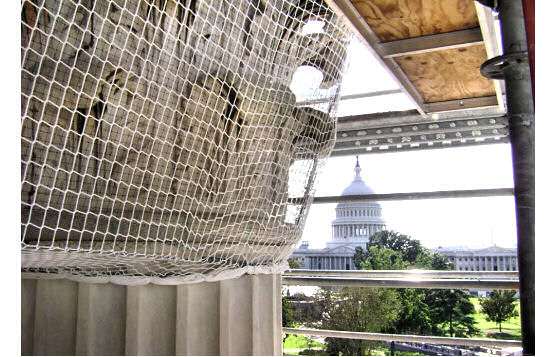
From the street, your building’s roof might look safe enough — flat, quiet, and far from any immediate danger. But step onto that rooftop, and the picture changes fast.

For countless property owners and facility managers, one of the most serious fall hazards is hiding in plain sight: rooftop HVAC units, vents, antennas, or other equipment located dangerously close to unprotected edges.

Why It’s More Dangerous Than You Think

Contractors and maintenance staff often need to work within a few feet of the roof edge to service equipment. They’re focused on repairs, not their footing — and that distraction is all it takes for a serious or fatal fall.

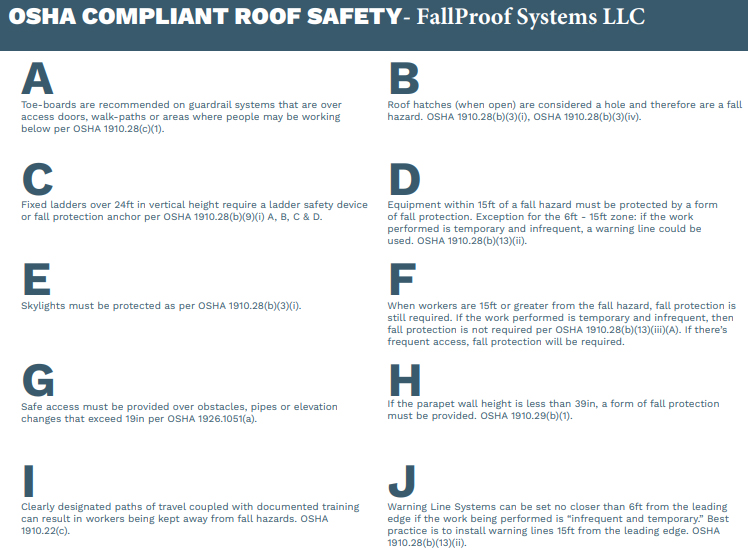
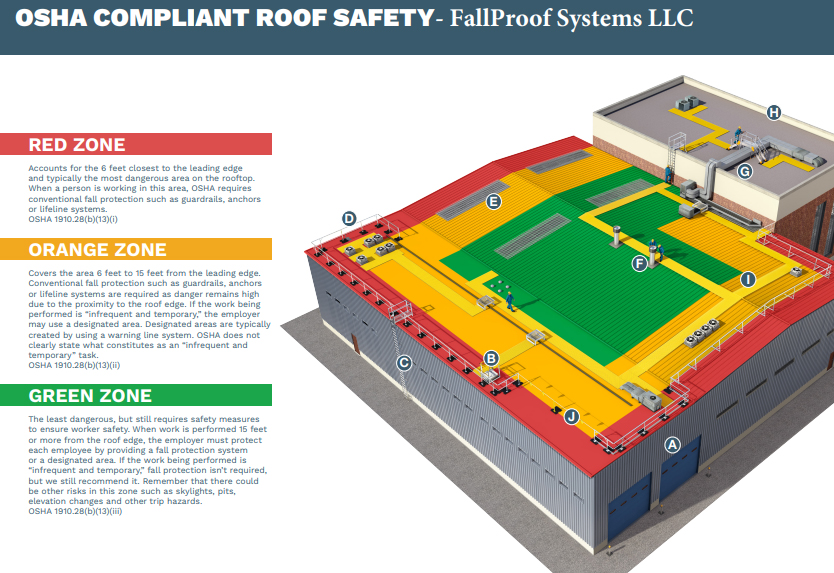
OSHA’s general fall protection requirement under 29 CFR 1910.28(b)(13) states that employers must ensure workers on a low-slope roof within 15 feet of an unprotected edge are protected by a guardrail, safety net, or personal fall arrest system. That means even if your rooftop equipment isn’t right at the edge, you may still be out of compliance.

The Real Costs of Overlooking Rooftop Safety

  • Regulatory fines: OSHA citations for fall protection violations can exceed $16,000 per instance.
  • Legal liability: One accident can lead to lawsuits, increased insurance premiums, and damage to your company’s reputation.
  • Operational downtime: A fall incident can shut down rooftop access, delaying critical repairs and disrupting tenants.

Permanent Rooftop Guardrail: The Compliant, Low-Maintenance Fix

Unlike temporary measures like warning lines or harness tie-offs, a permanent rooftop guardrail system:

  • Meets OSHA requirements year-round
  • Protects all workers, employees, contractors, and visitors without special training or PPE
  • Requires no ongoing adjustment or setup before each job
  • Blends with the building’s architecture to maintain a professional look

Per 29 CFR 1910.29(b), a compliant guardrail must:

  • Have a top rail height of 42 inches ± 3 inches above the walking/working surface
  • Include a mid-rail halfway between the top rail and the working surface
  • Withstand at least 200 pounds of force applied outward or downward

A Safer Roof, A Safer Business

By addressing rooftop hazards now, you’re not just complying with OSHA — you’re preventing accidents, protecting your people, and avoiding costly disruptions.

FallProof Systems specializes in engineered rooftop guardrail solutions tailored to your building and your budget. Our turnkey service covers assessment, design, installation, and inspection — so you can focus on running your business, not managing safety risks.

Ready to Uncover the Hidden Risks?

Let us help you turn blind spots into protected zones.
📅 Schedule a Safety Assessment Today »

📞 Or call us at (609)-325-5555
Custom Fall Protection: Why One Size Doesn’t Fit All

July 22, 2025, 9:30 pm | by Ray Nardo

Custom Fall Protection Solutions for Unique Work Environments

Custom Fall Protection: Why One Size Doesn’t Fit All?
Because safety should adapt to your environment — not the other way around.
Every facility is different. Whether you’re working in a steel mill, food processing plant, warehouse, or on a historic rooftop, one thing is always true: standard fall protection doesn’t cut it.
At FallProof Systems, we know that protecting workers means designing systems that match the environment, operations, and hazards of each specific site.

When “Off-the-Shelf” Doesn’t Work –
Pre-engineered systems often fail in facilities that have:

  • Obstructions like overhead cranes, piping, or ductwork
  • Unusual rooftop elevations or fragile surfaces
  • Tight maintenance access paths
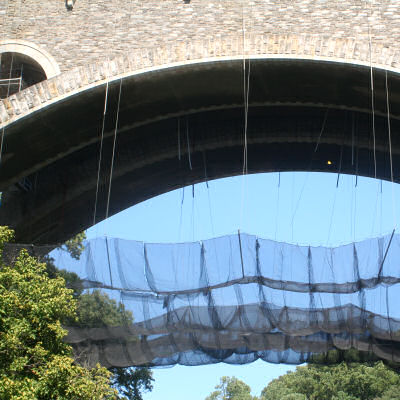
  • Historic structures or visually sensitive environments

What Custom Fall Protection Looks Like –
A truly custom solution includes:

  • Engineering analysis of structure and workflow
  • Unique layout designs based on field measurements
  • Custom-fabricated equipment (rails, anchors, platforms)
  • Seamless integration into existing infrastructure
    It’s not just about compliance — it’s about real-world usability.

Real Results from Custom Designs
We’ve designed systems for:

  • Protecting tanker truck hatches on uneven loading pads
  • Installing track systems over machines that never stop running
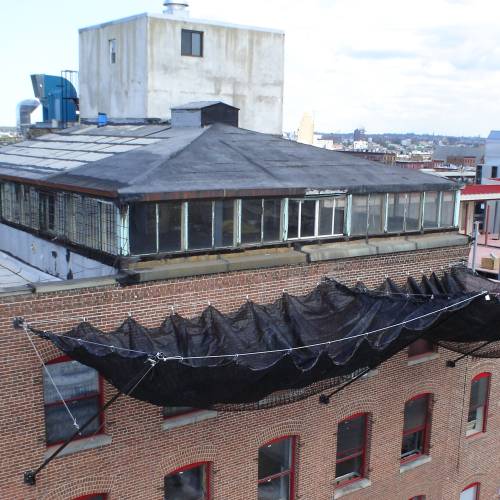
  • Adding fall safety to 100-year-old rooftops without permanent alteration

Let’s Build the Right Fit
Custom doesn’t mean complicated. With FallProof’s turnkey process, we handle everything — from site visit to install.
📅 Schedule a custom fall protection consultation »
📞 Or call us at (609)-325-5555
Final Word
When it comes to fall protection, a tailored solution isn’t a luxury — it’s a necessity.

Non-Penetrating Guardrails: A Design Available For Every Need

April 11, 2018, 2:32 pm | by Scott Daly

Non Penetrating Guardrails provide protection on rooftops and other elevated working surfacesFallProof Systems LLC has designed, provided, and installed non-penetrating guardrail on rooftops and elevated surfaces throughout construction sites and general industry locations. Guardrails are becoming a leading choice for building owners to protect workers and personnel from fall hazards.

No matter your industry, guardrails are a vital part of your workplace protection strategy. Though guardrails often go unnoticed or ignored, they are an important fixture in every OSHA-compliant facility. Read more.

Fall Protection for HVAC Chillers

March 20, 2017, 4:41 pm | by Ray Nardo

Fall hazards for industrial HVAC systemsIndustrial size HVAC chillers present multiple fall protection hazards. When located on a rooftop near an unprotected edge, simply approaching the chiller may expose your worker to the risk of falling. Roof edge guardrail, horizontal lifelines, and fixed anchor points can all be designed to protect your workers as they approach and service the lower areas of the equipment. However, from a hazard analysis standpoint, access to the fans from the top of the housing is probably the area with the greatest risk of falling. Read more.

Rooftop Fall Protection: The Absence of Skylight Railings Around A Skylight Dome Is The Equivalent of A Hole In The Roof

August 24, 2016, 11:59 am | by Ray Nardo

Non-Penetrating Guardrails Around Skylights On Flat RoofSkylight railings and screens save lives. If your workers are required to work on a roof and are exposed to an unprotected skylight without a guardrail around it or a screen over it, it is, according to OSHA, the equivalent of exposing them to a hole in the roof. OSHA has recorded 47 fatalities from skylight fall-throughs since 2010, with the most recent occurring last month in California. OSHA noted that over the past six years, the fall-throughs arose from a variety of worker behaviors while on, over and around skylights, such as: Read more.

Fall Protection Anchor Points: When Custom Design, Fabrication and Installation Might Be Needed

June 13, 2016, 3:23 pm | by Ray Nardo

Design, installation and use of fall protection anchor points for fall arrest.Fall protection anchor points are a versatile tool that with proper design, installation and use can protect workers in a variety of situations. Without all three of these factors being present, there is the possibility that a worker may have the illusion of being protected with the reality of being no more safe than working without any fall protection at all. Read more.

Guardrail Systems Installation: Temporary, Permanent or Modular?

April 19, 2016, 1:46 pm | by Ray Nardo

Kee Walk non-slip OSHA-compliant non-penetrating roof walkway installations for safe rooftop access.Guardrail systems installation can be temporary or permanent, modular or custom fabricated, and penetrating or non-penetrating. Selecting the right type of guardrails for your particular application is an important factor in the planning process of your fall protection system. Read more.

Fall Protection For Universities and Colleges: Hazards Abound

October 29, 2015, 12:43 pm | by Ray Nardo

Fall Protection For Universities and CollegesAt first glance, fall protection for universities and colleges is not something you would think there is much need for, but fall hazards abound nevertheless.  Take a critical look around any university or college campus, and you will often find numerous work areas where maintenance people, contractors, and even students might encounter dangerous hazards.  The following are some of the more common areas on college campuses that should not be overlooked: Read more.